
15 Free Things to Do in Bath: A Budget-Friendly Guide

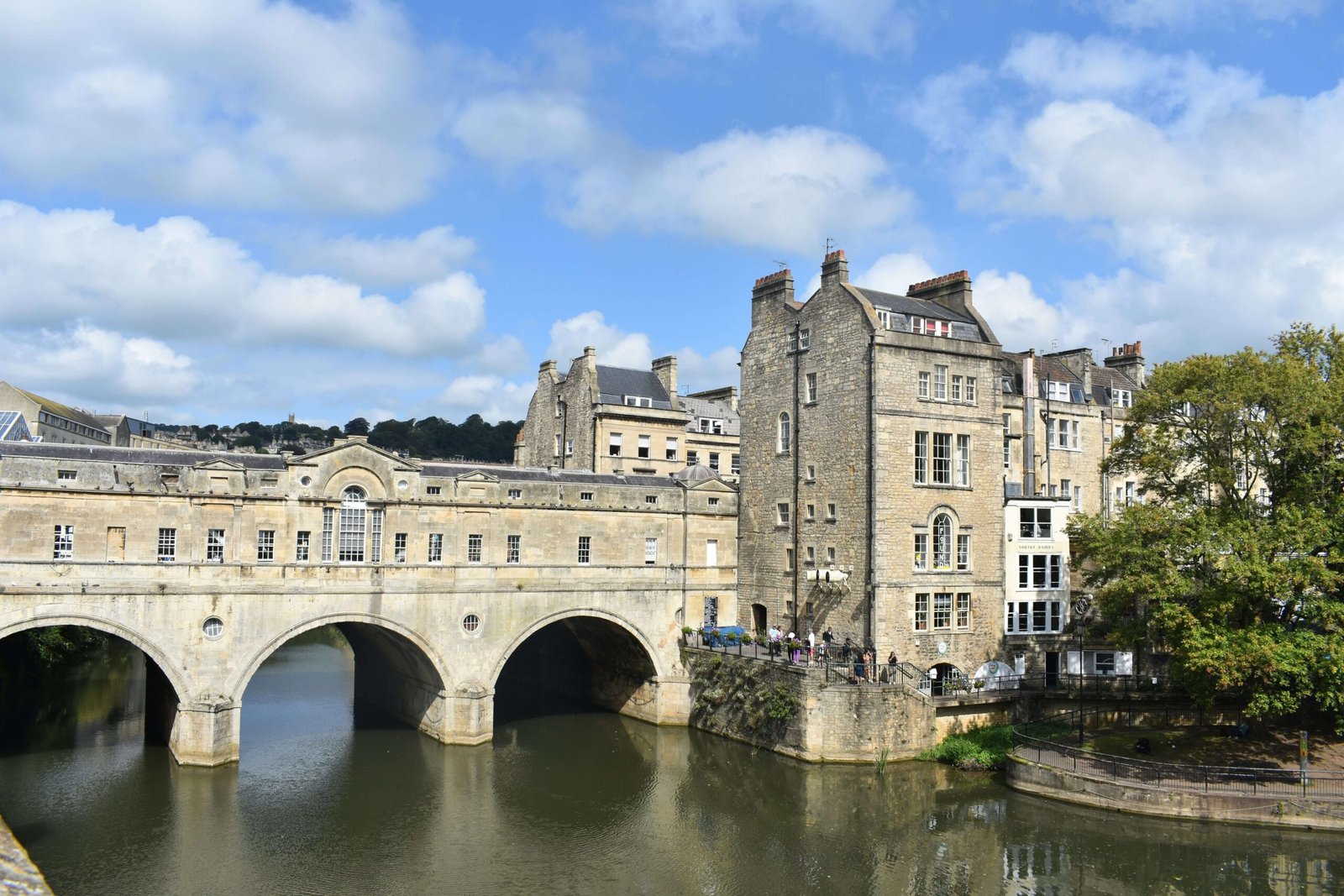
Bath has a reputation for being expensive, but you don’t need to spend a fortune to enjoy it.
I’ve visited Bath several times, and some of my favourite memories have nothing to do with paid attractions. I love wandering through the Georgian streets, admiring the Royal Crescent and stopping for the views around Pulteney Bridge.
On one visit, we stumbled across a café near Bath Abbey and spent far longer than planned sitting outside, watching the world go by. It’s a reminder that you don’t need a packed itinerary to enjoy the city.
While attractions such as the Roman Baths and Thermae Bath Spa charge admission, there are plenty of free things to do in Bath. Below, I’ve shared 15 places and activities to consider, plus a walking route to help you plan a budget-friendly visit.
If you only have one day, I’d focus on the city-centre landmarks and allow at least half a day to explore them without rushing. Bath City Farm and the Bath Skyline are better suited to a longer visit, while the parks are perfect for slowing down along the way.
This post may contain affiliate links which means that we may earn a small commission, at no extra cost to you, for qualifying purchases. More info: read our disclaimer.
1. Admire Bath Abbey from the outside
Bath Abbey is one of the city’s most recognisable landmarks, and you don’t need to go inside to appreciate it.
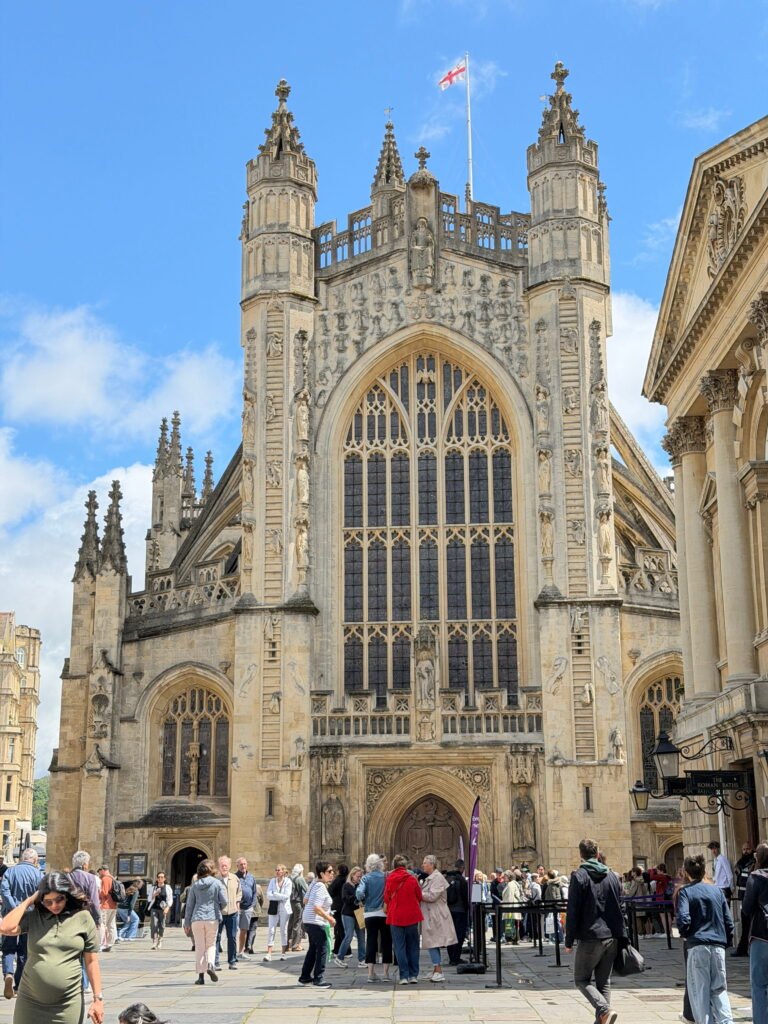
The building is beautiful from the outside, particularly when you’re standing in the square and looking up at its intricate stonework and large windows.
It’s also one of the places I always seem to find myself returning to whenever I’m in Bath.
If you’re visiting on a budget, I’d make this one of your first stops. Spend a few minutes looking up at the Abbey’s stonework before exploring the surrounding streets.
There are usually plenty of people coming and going, but I think that’s part of the appeal. It feels like the heart of the city.
Budget tip: You can admire the Abbey’s exterior for free. If you’d like to explore the interior or climb the tower, check the current admission arrangements before visiting.
2. Wander around Abbey Green
Just a short walk from Bath Abbey, Abbey Green is a lovely little square that’s easy to miss if you’re rushing between the main attractions.
It’s surrounded by historic buildings and has a beautiful tree in the middle, making it feel a little tucked away despite being so close to the busiest part of the city.
I think Bath is at its best when you give yourself time to discover places like this rather than sticking rigidly to an itinerary.
Abbey Green is also worth visiting if you’re a Bridgerton fan.
The Abbey Deli was used as Madame Delacroix’s dress shop, the Modiste, in the series.
You don’t need to book a filming locations tour to see the exterior, so it’s an easy free stop to add to your walk around Bath.
3. Walk along Bath Street
Bath Street is an easy stop to include if you want to see more of Bath’s Georgian architecture without spending anything.
Its Georgian colonnades make it particularly distinctive, and it’s one of the filming locations associated with Bridgerton.
Even if you’ve never watched the series, I’d still recommend wandering through this part of the city.
One of my favourite things about Bath is how much there is to admire simply by walking around. You don’t have to enter every historic building to appreciate the architecture.
Bath Street is close to the Roman Baths and Thermae Bath Spa, so it fits naturally into a walk around the city centre.
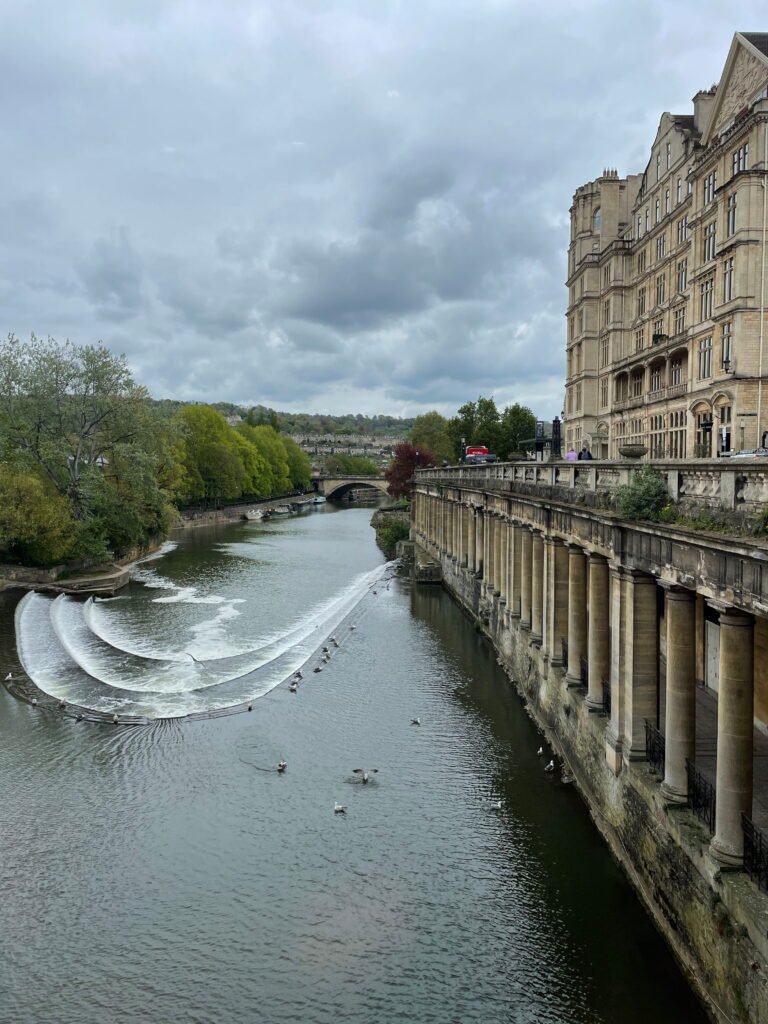
4. See Pulteney Bridge and the River Avon
Pulteney Bridge is somewhere I always make time for when I visit Bath.
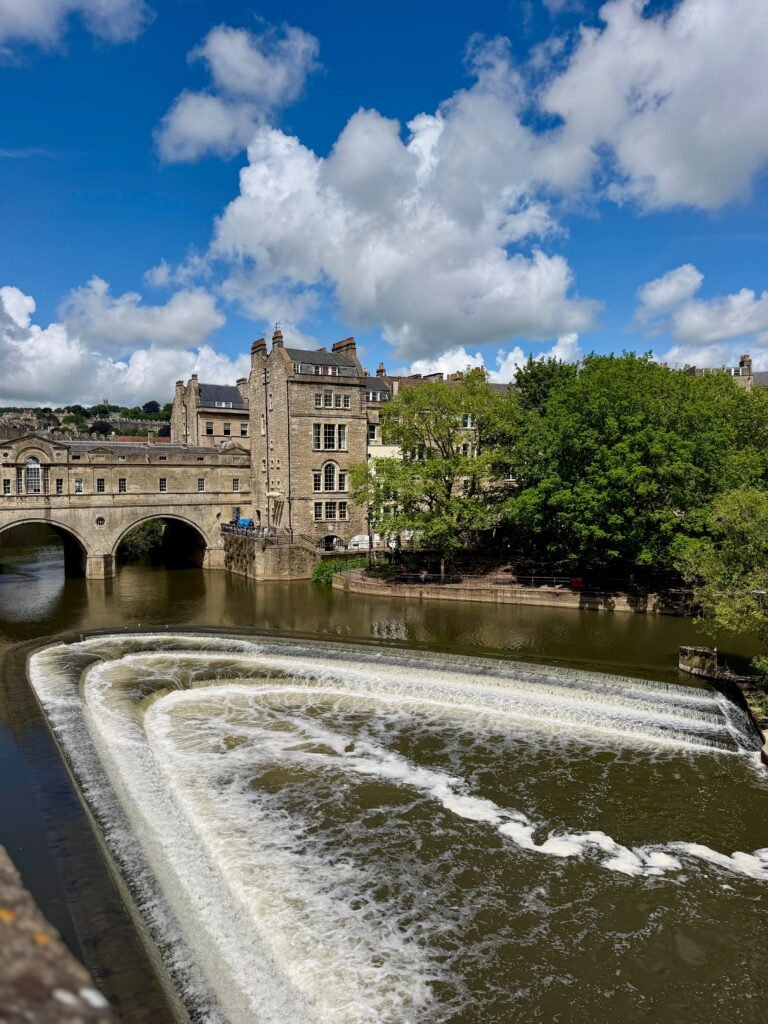
It’s one of those landmarks that looks beautiful from several different angles, so I wouldn’t just cross the bridge and move on.
Instead, take some time to walk around the surrounding area and enjoy the views over the River Avon.
The bridge and horseshoe weir make this one of my favourite views in Bath, and you can enjoy both without paying for an attraction ticket.
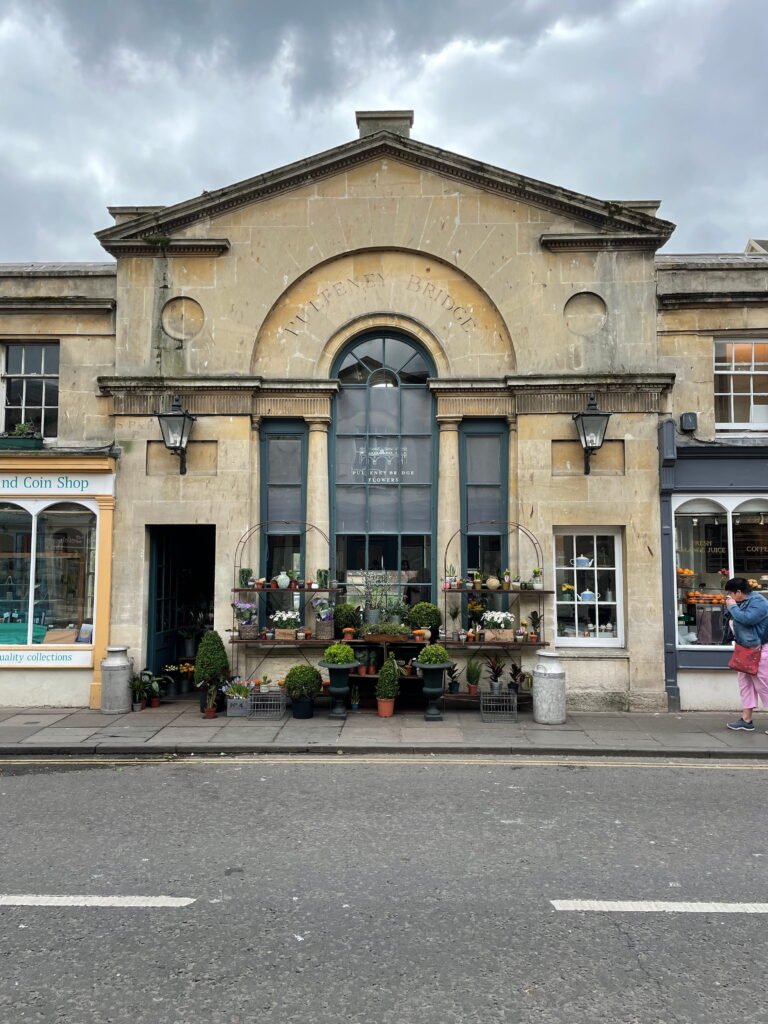
If you’re visiting with a camera, this is somewhere I’d make time for. But even if you’re not interested in photography, it’s a lovely place to stop and take in your surroundings.
Budget tip: You don’t need to pay for a river cruise to enjoy the scenery around Pulteney Bridge. Walking around the area gives you several lovely views for free.
5. Explore Great Pulteney Street
If you’re already visiting Pulteney Bridge, I’d consider walking along Great Pulteney Street too.
It’s one of Bath’s grand Georgian streets, and I love how imposing the buildings feel as you walk along it.
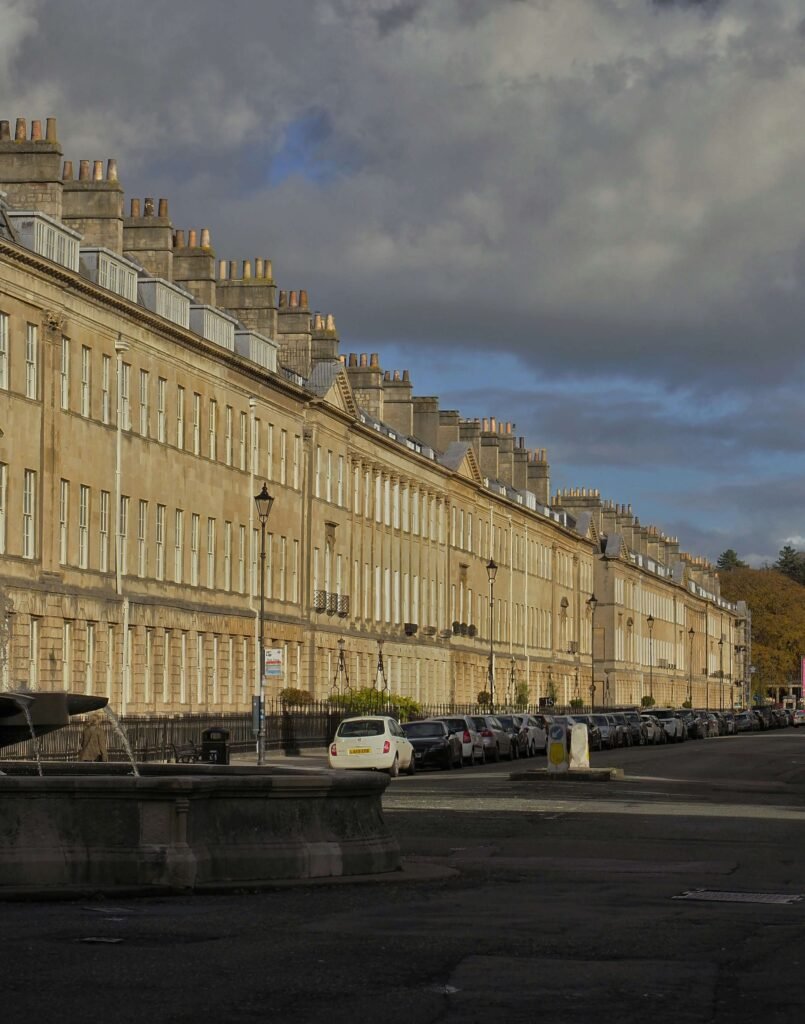
This is the sort of place that makes Bath feel so different from London, despite being close enough to visit on a day trip.
You can simply enjoy the walk, admire the buildings and continue towards the Holburne Museum if you have time.
The Holburne Museum is another location Bridgerton fans might recognise, as its exterior was used for Lady Danbury’s residence.
You can appreciate the building from outside without paying to enter the museum. Check the museum’s current arrangements separately if you’d like to see its exhibitions.
If you only have a few hours in Bath, I’d include Great Pulteney Street if Georgian architecture is one of the things you’re most interested in seeing.
6. Admire The Circus
The Circus is one of Bath’s most impressive architectural landmarks, and it’s an easy free stop to include while exploring the city on foot.
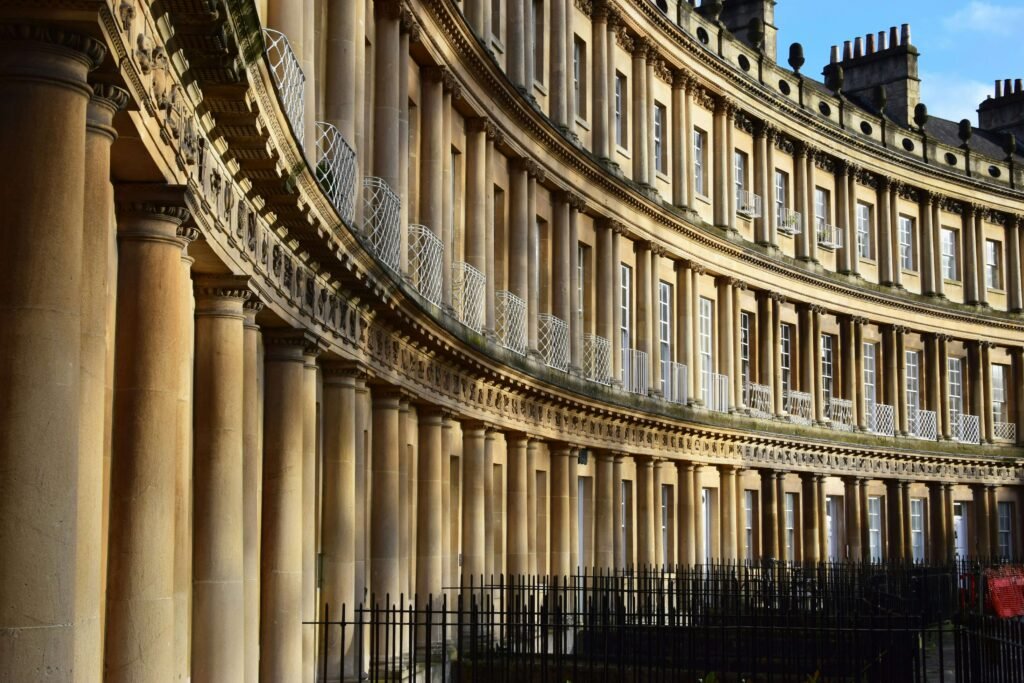
Unlike the Royal Crescent, which forms one sweeping curve, The Circus is made up of Georgian townhouses arranged in a complete circle. It’s worth walking around rather than just passing through, as the unusual layout is what makes it so distinctive.
You don’t need to go inside any of the buildings to appreciate the architecture, and it’s a good example of how much of Bath you can enjoy without paying for an attraction ticket.
The Circus is also close to the Royal Crescent, so I’d visit the two together. Seeing both gives you a chance to appreciate two very different examples of Bath’s Georgian architecture in one short walk.
7. Visit the Royal Crescent
The Royal Crescent is one of my favourite parts of Bath, and it’s somewhere I’ve returned to on several visits.
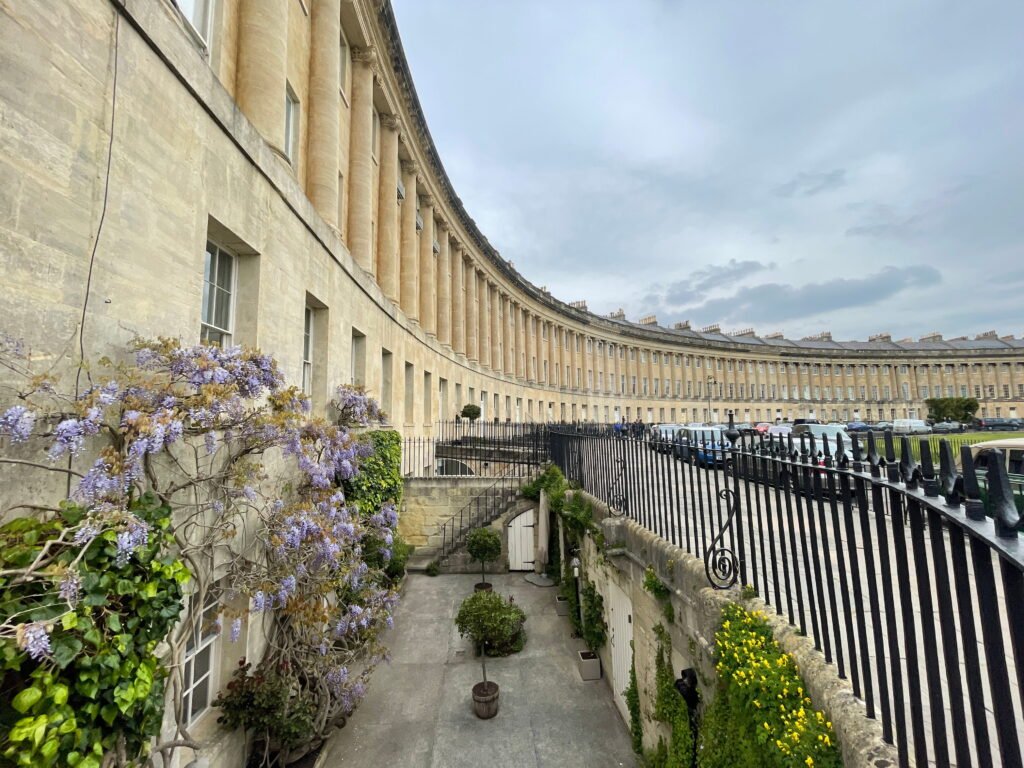
The sweeping curve of Georgian houses is impressive in photographs, but I think it’s even better in person, especially when the sunlight catches the Bath stone.
You don’t need to pay to admire the Royal Crescent from outside, which makes it one of the best free things to do in Bath.
I’d take your time here rather than treating it as a quick photo stop. It’s a lovely place to appreciate the architecture and enjoy being in the city.
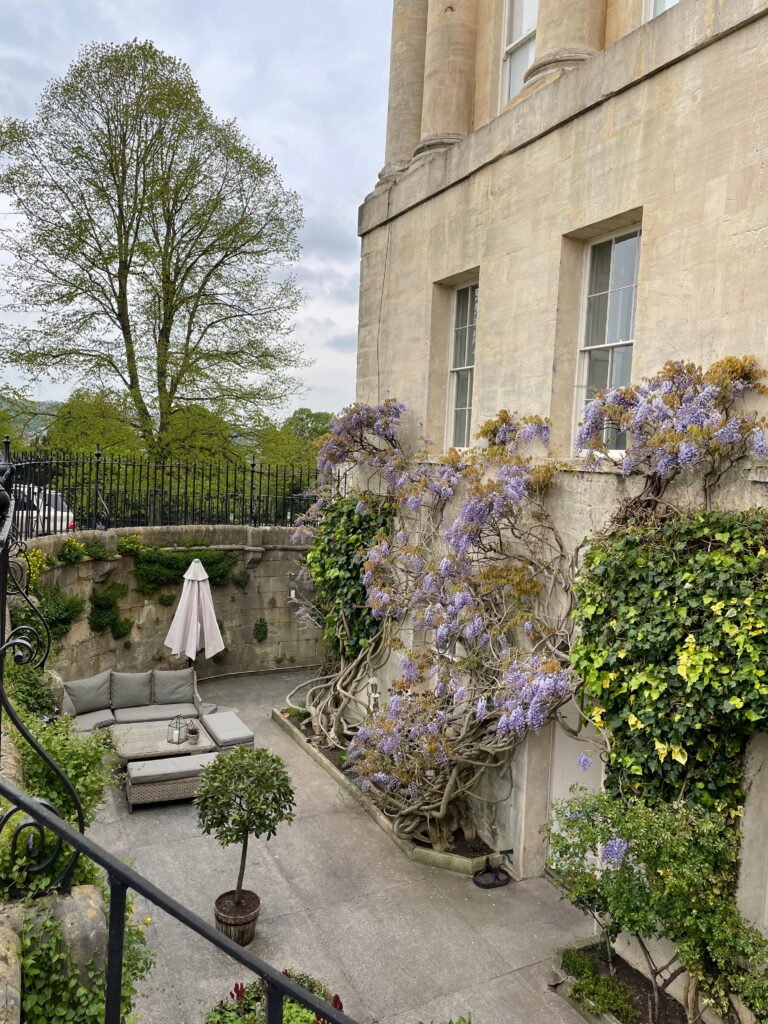
If you’re a Bridgerton fan, there’s another reason to visit.
No. 1 Royal Crescent was used as the exterior of the Featherington family home.
You can recognise the building from the street without paying to enter the museum.
Budget tip: The Royal Crescent itself is free to admire from outside. Visiting the museum at No. 1 Royal Crescent is a separate, paid experience.
8. Enjoy Royal Victoria Park
If you’ve spent the morning walking around Bath’s historic streets, Royal Victoria Park is a lovely place to slow down.
It’s opposite the Royal Crescent, so it makes sense to combine the two.
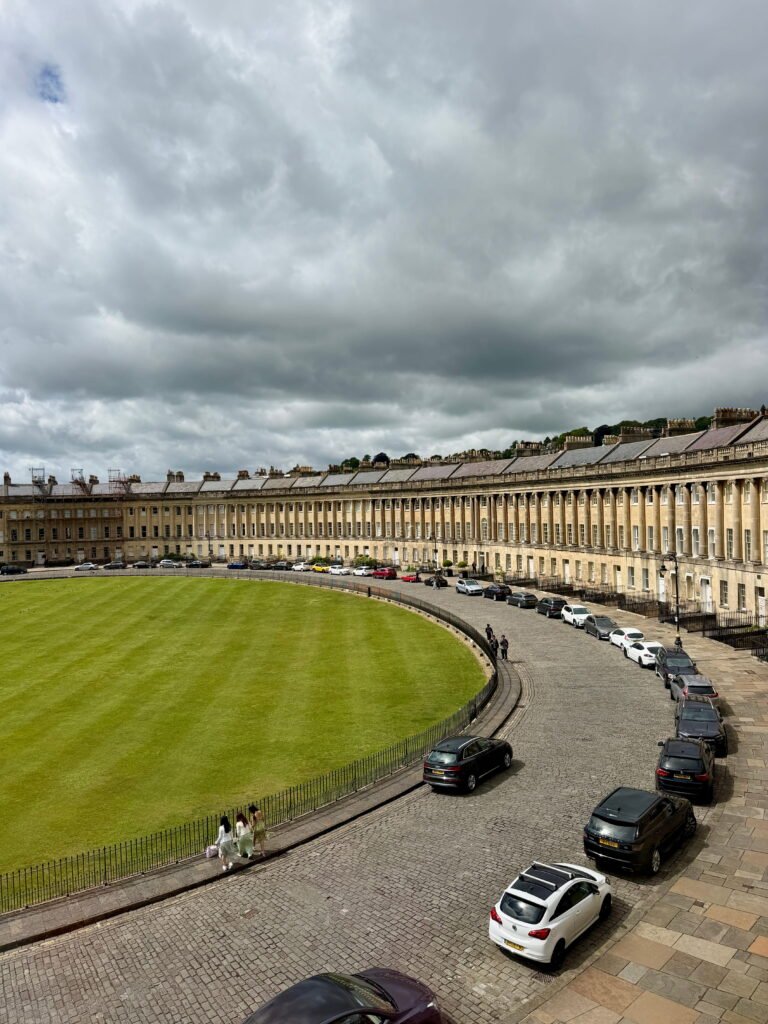
You could bring a picnic, find somewhere to sit or simply enjoy a walk through the green space. I spent a beautiful summer’s day here reading a book, and it was such a lovely change from rushing around the city.
This is particularly appealing if you’re visiting Bath on a sunny day and don’t want to spend your entire visit moving between busy attractions.
A budget-friendly trip doesn’t have to mean filling every hour with free sightseeing.
Sometimes it’s nicer to give yourself time to enjoy a place.
And in a city like Bath, I think that’s part of the experience.
9. Explore Sydney Gardens
If you’d like to see another side of Bath beyond its busiest historic streets, Sydney Gardens is worth considering.
The gardens are in the Bathwick area, close to the Holburne Museum, so they fit nicely into a longer walk along Great Pulteney Street.
They’re a good option if you want somewhere green to sit, enjoy a picnic or take a break from sightseeing.
Sydney Gardens also has an interesting history. They began as Georgian pleasure gardens, and Jane Austen is associated with the area.
You could spend the morning exploring the city centre, walk towards Pulteney Bridge and Great Pulteney Street, then finish with some time in the gardens.
10. Visit Bath City Farm
If you’re looking for something a little different from Bath’s historic streets and Georgian architecture, Bath City Farm is a lovely free attraction to consider.
You can meet a variety of farm animals, although the animals you see may vary when you visit. There’s also a children’s playground, woodland and nature trails, making it a particularly good option if you’re visiting Bath with children.
One of the things that makes the farm special is its setting. It sits on a hillside with views across Bath, so you can enjoy some fresh air and see a different side of the city.
Admission is free, although donations are welcome as the farm is a charity. There’s also a café and farm shop if you fancy buying something during your visit.
I’d allow around one to two hours for a relaxed visit, particularly if you’re bringing children who’ll want time at the playground.
Bath City Farm is approximately two miles from Bath city centre. You can get there on the number 5 bus, getting off at Mount Road or Whiteway Circle and walking the remaining distance. If you’re travelling by train, Oldfield Park is the nearest station, approximately a 20-minute walk away.
My tip: I wouldn’t squeeze Bath City Farm into a short walking itinerary alongside all the main landmarks. I’d save it for a longer visit or make it the main activity if you’re planning a budget-friendly day out with children.
Check the Bath City Farm website for current opening times before visiting.
11. Visit Green Park Station
Green Park Station is another place to consider if you enjoy historic buildings and browsing independent stalls.
The former railway station has been repurposed as a space for shops, food businesses and markets, while retaining much of its railway character.
It’s somewhere you can have a look around without needing to buy anything.
If you’re visiting on a market day, you may find local makers and other traders selling their products.
Of course, browsing is free, but shopping and eating aren’t!
I’d treat Green Park Station as an optional stop rather than something you need to cross the city for on a short visit.
It’s a particularly useful addition if you’re already exploring that side of Bath or want somewhere different to wander after seeing the main landmarks.
Budget tip: Check what’s happening at Green Park Station before your visit. Market days and individual traders can change.
12. Join a free walking tour of Bath
If you’d like to learn more about Bath’s history without paying for a guided tour, look into the walks run by the Mayor of Bath’s Honorary Guides.

Their classic city-centre tour takes approximately two hours and covers major landmarks including the Royal Crescent and The Circus.
The walks are genuinely free. The guides are volunteers and don’t accept tips, so there’s no expectation to pay at the end.
The regular tours start from Abbey Churchyard, near the entrance to the Roman Baths and the Pump Room.
At the time of writing, the usual departure times are:
- Sunday to Friday: 10.30am and 2pm
- Saturday: 10.30am
The classic walking tours run throughout the year except Christmas Day. You don’t need to book in advance; simply arrive around 10 minutes before the departure time.
I’d consider joining a morning walk if you’re visiting Bath from London. You could spend two hours learning about the city, stop for lunch and use the afternoon to explore whichever places you’d like to see again.
The guides also offer seasonal and themed walks, although some special tours require advance booking.
My tip: Check the Mayor of Bath’s Honorary Guides website before your visit for the latest departure times and meeting-point information.
If you join this tour, you won’t need to follow my entire free walking route afterwards, as you’ll already have seen some of the same landmarks.
13. Follow a free Bridgerton filming locations walk
You don’t need to book a paid tour to see some of Bath’s best-known Bridgerton filming locations.
If you’re exploring independently, I’d start at Bath Street, then walk to Abbey Green to see the exterior of the Modiste.
From there, you can head towards Pulteney Bridge and continue along Great Pulteney Street to the Holburne Museum, which was used as Lady Danbury’s residence.
The Royal Crescent, used for the exterior of the Featherington family home, is on the other side of the city centre, so I’d combine that stop with your visit to The Circus rather than doubling back just for a photograph.
This way, you can enjoy the filming locations as part of your wider sightseeing instead of paying for a separate experience.
14. Take a walk along the Bath Skyline
If you enjoy walking and would rather spend time outdoors than in museums, the Bath Skyline is another free option to consider.
The route takes you into the countryside around Bath, with views back towards the city. It’s a different experience from wandering through the Georgian streets, so I wouldn’t try to fit the full walk into a short sightseeing itinerary.
The National Trust’s full circular Bath Skyline route is approximately six miles (9.6 km) and takes around three and a half to four hours to complete. It’s graded as a moderate walk, with hills, steps and uneven terrain in places.
The official route starts at Bathwick Hill, near Cleveland Walk. I’d download the route before setting off rather than relying on finding your way as you go.
You can find the full directions and a printable route on the National Trust’s Bath Skyline walking guide.
If six miles sounds like too much, the National Trust also has a shorter three-mile Walk to the View from Bath city centre. That could be a better option if you want to enjoy the countryside without committing most of your day to walking.
Wear comfortable walking shoes, check the weather and take some water with you.
My tip: If you’re visiting Bath for the first time and only have a few hours, I’d prioritise the city centre. But if you’ve already seen the main landmarks or you’re spending a weekend in Bath, the Skyline could be a lovely way to explore somewhere different.
15. Look for free events and festivals in Bath
One thing that’s easy to overlook when planning a budget trip is that Bath has events throughout the year.
Depending on when you visit, you might find free performances, exhibitions, markets or community activities.
The important thing is to check what’s actually happening during your trip rather than assuming a particular event will be running.
I’d look at the local events calendar before deciding on your itinerary, especially if you’re visiting during school holidays or over a weekend.
Bath Rocks has a section dedicated to free things to do in Bath, with a particular focus on families.
It’s worth checking close to your travel date to see whether there’s anything you’d like to add to your plans.
I wouldn’t build your entire trip around an event without confirming the date, location and whether admission is genuinely free.
How to spend a day in Bath for free
I’d allow at least half a day for these stops, with longer if you want to enjoy a picnic in Royal Victoria Park or spend time exploring the streets along the way.

If I were planning a budget-friendly day in Bath, I’d focus on the city centre and the Georgian landmarks rather than travelling between lots of different areas.
This is the route I’d suggest:
- Bath Spa station: Start here if you’re arriving by train.
- Bath Abbey: Admire the exterior and enjoy the square.
- Abbey Green and Bath Street: Explore the Georgian streets and spot a couple of Bridgerton filming locations.
- Pulteney Bridge: Enjoy the views over the River Avon.
- Great Pulteney Street: Add this if you have time for a longer walk.
- The Circus: Admire the circular Georgian terrace.
- Royal Crescent: Take in one of Bath’s most recognisable landmarks.
- Royal Victoria Park: Finish with a relaxed walk or picnic, then make your way back towards the city centre and Bath Spa station if you’re travelling by train.
If you’re travelling from the capital, my guide to planning a day trip to Bath from London covers how to make the most of your time in the city.
You don’t need to follow this route rigidly. If you see a street that looks interesting or find somewhere lovely to sit, I’d make time for that too.
That’s one of the nicest things about exploring Bath without a packed schedule.
If you want to include Sydney Gardens, I’d visit after Great Pulteney Street, then return towards the city centre before heading to The Circus and Royal Crescent.
Green Park Station is better treated as an optional stop rather than something to squeeze into the main route.
Can you visit Bath without spending much money?
Absolutely, although I think it’s worth being realistic about what a budget trip involves.
You can spend a lovely day exploring Bath’s streets, seeing its famous landmarks and enjoying the atmosphere without paying for attraction tickets.
But that doesn’t mean every experience in Bath is free.
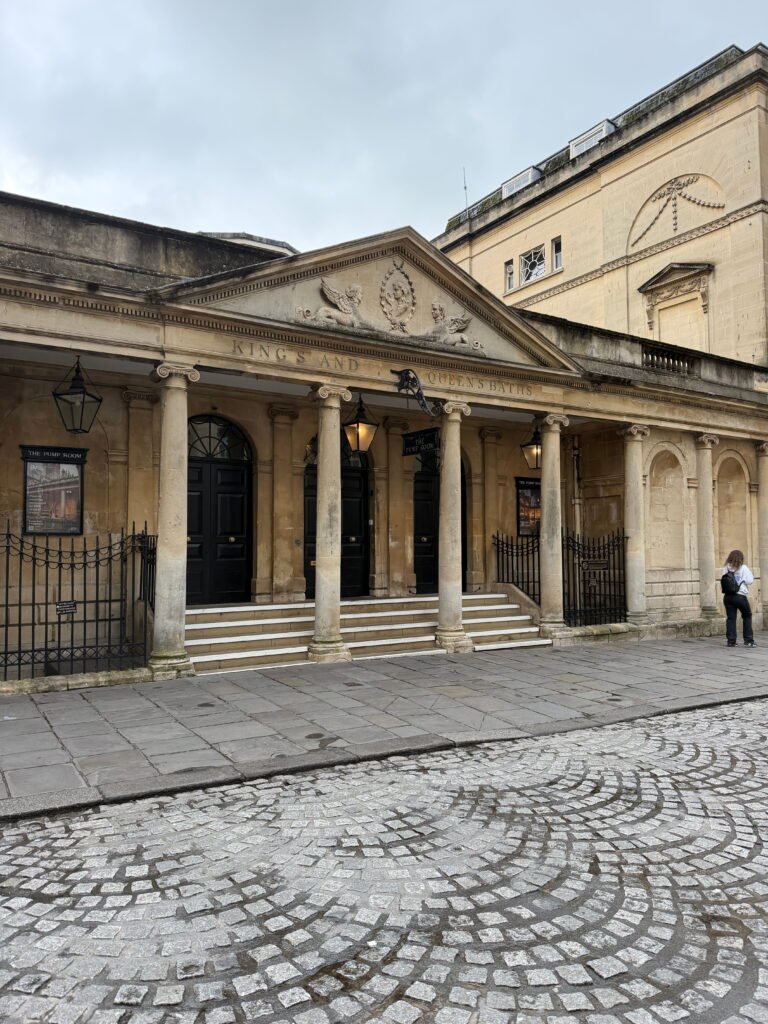
The Roman Baths, Thermae Bath Spa and some historic interiors require paid admission. Food, drinks and transport will also affect your budget.
If you’re travelling from London, your train ticket may be one of your biggest expenses, so I’d compare fares before choosing your travel date.
If there’s one paid attraction you really want to visit, you could budget for it and enjoy the rest of Bath for free.
And if you’re planning a longer visit or celebrating something special, you might prefer to save money on sightseeing and put more of your budget towards somewhere memorable to stay. I’ve rounded up six spa hotels in Bath for a special occasion if that’s the kind of trip you have in mind.
But if your budget doesn’t stretch to admission, I wouldn’t feel that you’ve missed the point of visiting. The architecture, streets and atmosphere are a huge part of what makes the city special.
My tips for enjoying Bath on a budget
There are a few simple things I’d do to keep the cost of a Bath trip manageable.
Book transport in advance if you can. If you’re travelling from London, compare train fares and journey times before deciding which service to take.
Choose one paid attraction rather than several. If the Roman Baths are particularly important to you, budget for those and enjoy the rest of the city on foot. If you’re unsure what you’d most like to see, my first-timer’s guide to what to do in Bath covers more of the city’s attractions and experiences.
Bring lunch or plan a picnic. Bath has plenty of places to eat, but buying breakfast, lunch, coffee and dinner can quickly increase the cost of a day trip.
Wear comfortable shoes. Exploring Bath on foot is one of the easiest ways to save money, but some of the streets are uphill.
Check for free events. Look at local listings close to your travel date in case there’s something happening that you’d enjoy.
Leave time to wander. You don’t need to spend money every hour to feel as though you’ve made the most of your visit.
And I’d avoid booking an attraction simply because everyone else seems to recommend it. Choose the experiences that actually interest you.
Is Bath worth visiting on a budget?
Absolutely. Some of my favourite parts of Bath are completely free to enjoy, from walking towards the Royal Crescent to stopping for the views around Pulteney Bridge.
If you’re visiting for the first time and want to include paid attractions, my guide to what to do in Bath has more ideas for planning your visit. And if you’re travelling from the capital, my day trip to Bath from London itinerary will help you make the most of one day.
But if your plan is simply to admire the architecture, explore the streets and enjoy a change of scenery, you really don’t need an expensive itinerary.
Sometimes, wandering around a beautiful city is enough.
